
Back in my post about low-stress gatherings and social activities, I listed a few fun activities that you can do with a group of family and friends. In the past year, escape rooms have become one of my all-time favorites.
If you aren’t familiar with the concept of the escape room, it’s a room where you are ostensibly trapped, although of course for legal and safety reasons you actually can leave at any time. The room is filled with clues to find, puzzles to solve, and locks to open, eventually leading to a final solution that opens the exit. Rooms typically follow a theme that adds flavor and cohesion to the experience. For example, you might be thieves trying to steal a diamond, or castaways trying to escape an island, or hostages of a serial killer. The first escape room opened in Japan in 2007, and hit the United States in 2012.
I first heard about escape rooms sometime in 2014, and it became one of those things that I really, really wanted to to do, and yet somehow never got around to doing. In December 2017, when Katie and I were trying to come up with our annual December New Experience (see this post for our most recent adventure), we decided it was past time that we checked escape rooms out.
Since then, I have become obsessed.
Katie and I went to a Christmas themed room, having only a limited idea of what to expect. It was slightly awkward at first because we were teamed up with a group of four experienced players that we’d never met before. However, within a few minutes, the preexisting sub-teams had broken up and reformed as needed for the various challenges (More on that later).
We had an amazing time, and I was back to try another room in less than two weeks. Since then, I’ve been to multiple locations with a variety of different groups, and am pretty much up for any room, any day, any time.
So here’s why escape rooms are awesome:
1. They’re a great social activity.
An escape room is a group activity. Given the time limit, there’s no way to solve all the puzzles on your own. Some companies have you book the entire room (as long as you have a minimum number of people), while others have you book per player, so if your group is smaller than the maximum number of spots, you’ll be combined with other people. I’ve played with just my friends, with a few of my friends and a few people I didn’t know, and once, when I felt the urge to play and no one I knew wanted to join me, with a team of complete strangers. Regardless, teamwork is an essential part of the activity.
 Working with strangers is a prospect that has unnerved some people I’ve played with, but they’ve all found the experience positive, because there is an immediate bonding effect when you’re faced with a series of challenges and a limited time. Divide and conquer, come back and cooperate. You have a group, but you don’t have all four or eight or twelve people looking at the same thing at the same time. It really creates a sort of microcosm of what effective teamwork should look like when you’re faced with a larger project. People move from task to task, subgroups form as needed, communication is constant, and in the end, it doesn’t matter how well you actually know each other, because you’re all focused on the objective, and everybody is having fun.
When Katie and I went the first time, we both sort of expected that the two of us would stay together and the four we were paired with would do the same. Instead, Katie and I actually spent very little of the hour on the same puzzles, because our talents lay in different areas. We had as much fun working with our new acquaintances as we would have had working together. One of the reasons I love escape rooms as a social activity is because the fun and positive vibes are totally infectious. In fact, the one time I went alone I ended up going to lunch with some of the others I had played with.
2. They’re really detailed and inventive.
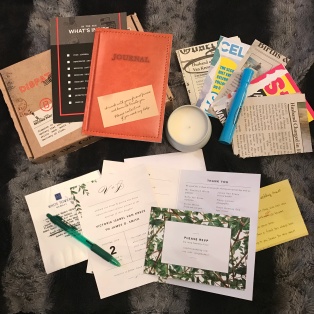
The room themes, setups, and props are really detailed, and a lot of fun to explore. Maps, photographs, newspaper clippings, books, statues, and furniture have all played important roles in various rooms I’ve experienced. Escape room companies spend a ton of time creating engaging and realistic props, clues, and atmosphere for their games. (Note: Since I can’t take pictures in an actual escape room, the items pictured are from Dispatch, an at home version available from Breakout Games.)
Some of the more intense experiences included starting the hour in handcuffs, and a truly freaky set of clues in a serial killer themed room.
Note: In case those last two examples sound like a little too much for you, I should mention that those are the exceptions, and stuff like that is always clearly stated in the room’s description.
3. There’s something for everyone.
 I’m a big fan of puzzles in general, but there are definitely some types that I enjoy more than others. What’s cool about escape rooms is that they aren’t completely geared toward one type of thinking. Some tasks are about manipulating pictures, while others hinge on solving word puzzles or riddles. Some require spacial awareness or manual dexterity. Some involve math problems or code breaking. In one room, opening a lock required pulling information from a spreadsheet, and my team immediately handed it to me and went off to work on something else. (True confession: I love spreadsheets. They aren’t just for work anymore.)
One of my favorite escape room triumphs involved a team member who teaches math. Very early in the experience, she noticed a particular set of numbers attached to some items in the room. After thinking them over for a few minutes, she predicted that we might need to do a particular set of conversions at some point, so she did the math and wrote down the answers. Seeing no immediate need for them, she set them aside and went on to another puzzle. When we reached the point of trying to figure out the final door code, it turned out to be the exact answer she had figured out some forty minutes earlier. I would never have thought of that.
The point is that there are so many puzzles that no matter where your particular niche is, there’s a distinct area where you’ll be able to contribute
4. They provide a repeated achievement high.
 You know that feeling where you accomplish a task or overcome an obstacle? We all feel it, even for small things. Both working toward a goal and accomplishing a goal increase your body’s dopamine levels, and dopamine makes you feel happier and more energetic. There’s a reason it’s often called the “feel good hormone”. Because of the quick succession of challenges and accomplishments, the escape room experience is a constant series of victory moments. Every time somebody finds a clue you’ve been looking for, opens a lock, passes one objective, or finds your next direction, that “we did it, we’re winning, go team us” feeling pops up anew. I’ve never thought to keep track of how many times that happens, but I’d have to estimate a minimum of fifteen times in a one hour escape room.
That’s a lot of positive achievement vibes, and the longer we’re in the room, the stronger the feeling gets. The shouts of joy, high fives, encouragement, hugs, etc. increase exponentially as the clock ticks down. It’s a good way to turn a bad mood into a good one, or a good mood into a great one. Plus, every time I’ve solved an escape room, the good feeling sticks for at least a good hour afterwards, minimum.

Have you tried escape rooms? Are you a fan of puzzles? What other fun activities do you suggest? Let’s discuss!


 Carol Danvers, brought to life by Brie Larson, is one of my favorite heroes to come out of the Marvel Cinematic Universe so far, and that’s really saying something. She definitely is my favorite heroine. Carol is portrayed as strong, cool in the “collected” sense of the word, and as full of jokes and quips as any other Marvel character. She’s often facing overwhelming odds, but she does it with a smile on her face. The script, and the performance, create a fully realized character that you want to cheer for.
 The movie looks great. It retains the overall “Marvel” aesthetic, but it adds some really unique twists. Carol’s superpower is stunning. The designs of the alien vessels are wonderfully original, while still fitting into the visual stylings of previous films. Special effects, costume designs, set dressing…everything in the movie shows a careful attention to detail that makes the film totally immersive.


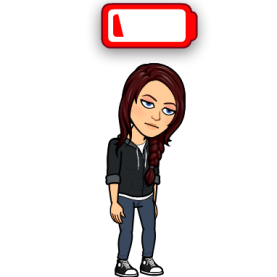 January’s insanity was ultimately overcome by massive expenditures of time and energy, with my productivity cranked up to eleven. At the beginning of February, I looked at everything I had recently accomplished and said, “Wow, look at me! I’m awesome. If I keep up this pace, I’m going to get so much done this month! I’m going to get ahead on everything, and maybe even take on some new projects.”
 Do enough work (at the job, with the blog, for other commitments) to maintain the appropriate level, and then stop. For one month, resist the urge to shoot for awesomeness at every moment. Do extra work only if the idea is actually appealing.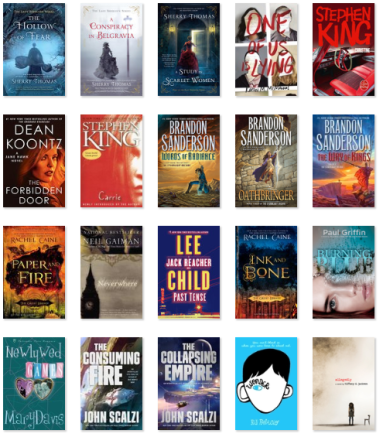


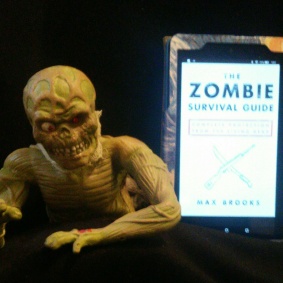 After my group had finished discussing our options and creating our final list, we stopped talking about the options provided for the scenario and began discussing how we would deal with a zombie outbreak at work. During that conversation, someone asked us all to choose three people to be part of our survival team.



 When I flip open my copy of Webster’s Dictionary, the very first definition of “love” has nothing to do with romance (that’s the second one). The first definition is “strong affection for another arising out of kinship or personal ties”.
 I think the romantic aspect of Valentine’s Day has been thoroughly covered elsewhere, so I’m going to skip that part. What I’m interested in is how to make Valentine’s Day a larger celebration of love in all its forms. So here are some things to consider:




 I’m sad to say that I barely did any writing this month. I’ve been so mentally exhausted most of the time that I’ve been consistently choosing reading over writing when I’ve had some time to spare (or just had to shut down for a while). I have a lot of trouble writing when I’m sick, stressed, or tired, and that’s where I’ve been for most of the month. I’ve been sitting on several nominations and tags that I really want to finish, but I just haven’t had the energy. To those of you that tagged and nominated me, I really appreciate it, and I promise that I haven’t forgotten. It’s just taking a while.











 Amanda Cade