
Thanksgiving is this week, and so I’ve been thinking a lot about reasons to be thankful. This year, I’m really focusing on the amazing people in my life, and have been considering the qualities that make them so important. Today, I’d like to encourage you to think about who fulfills these (and other) roles in your world, and take the time to express your appreciation. Personally, I’m most grateful for:
The Listeners
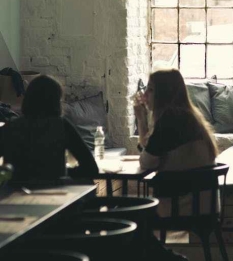 The listeners are ready to hear it all. Your worries, your disappointments, your frustrations, as well as your opinions, random thoughts, rambles, and funny stories. They’re the people who give your their full attention, remember important details in later conversations, and always make you feel valued. Good listeners are a rare and precious thing, because let’s be honest, most people are a lot more interested in talking. My mother is the best listener I know. Just this past Friday, after an 11 hour work day, I accepted her last minute invitation to feed me and then spent an hour telling her about my crazy work week. The world was a much better place by the time I headed home. I am so blessed to have her, and other great listeners, in my life.
The Encouragers
 The encouragers are the people who are always there to pick you up when you fall. They are the helping hand when that is what you need most, and the gentle boot to the buttocks when necessary. They won’t let you get sucked into a self-pity trap, and instead remind you of how you have been stuck there before and why you were able to get out, then push you to actually take action. My friend Mike is one of the best encouragers I know, always ready to lift my spirits and get me back on track. When things get difficult, like they did back in September, my encouragers help me get through it.
The Motivators
 The central trait of people I think of as motivators is that they are always saying “do more stuff”. I like trying new things when I’m doing it, but I rarely try things out by myself or on my own initiative. It’s the motivators in my life who take those whims and push them to actual experiences. I’ve written several times about how my best friend Katie and I have traditions of trying new experiences. That totally came from her. Without her I’d have the idle thoughts, but would probably say “maybe someday” and then sit in my house with my book. This blog exists because of another great motivator, my friend Alex, who spent over a year convincing me to try writing again, after a very long hiatus. He’s the reason this blog exists and has become such an important part of my life.
The Cheerleaders
 These are the people who really celebrate your accomplishments, and make sure you never miss a small victory. I will never forget my sister Audrey calling one evening and exclaiming, “Mom told me about the big increase in your team’s whatchamacallit metrics. I don’t know what it means, but I’m super proud of you!” That is a direct quote. Then she asked me to explain it to her and got doubly excited. Cheerleaders constantly remind us that we’re worthwhile people who do great things, even when the great things are also small things.
The Colleagues
 I often refer to all of my co-workers as my colleagues, but Colleague with the capital C is something totally different. These are the people we want to be working with when the pressure is on. The people who are always on the same wavelength, and often the people whose strengths balance our weaknesses and visa-versa. Not to mention the people we’d want on our team in the zombie apocalypse. My “work husband” is one of the world’s best Colleagues. I feel like we can solve any problem and tackle any challenge when we’re working together.
The Geek-Out Partners
 Things I love almost to the point of obsession: Books. Comic books. Fantasy & Science Fiction. Scary movies. The circus. Coffee. Things my sister Amy loves to the point of obsession: Books. Comic books. Fantasy & Science Fiction. Scary movies. The circus. Coffee. See my point? “Hey Amy, do you want to go see the Avengers for the sixth time?” “Hey Amanda, should we watch that six hour documentary on circus history?” “Let’s go to that convention in Atlanta.” People who are into the things you love are great, because they’re always ready to talk about and pursue your shared interests.
The Problem Solver
 Sometimes you want to talk about a problem. Other times you want to fix it. Still other times you want to fix it, but it seems unfixable, or you have no idea where to start. Thank God for problem solvers. The best one in my life, hands down, is my dad. If he doesn’t just know what to do (which he usually does), he will figure it out. Once, after watching a very strange movie, a group of friends and I asked ourselves the question, “What would we do if we had a car full of monster bodies?” I said, immediately, “Call my dad”. A few days later I actually asked him what he would do in that highly unlikely situation. Without a moment’s pause, he said, “Make sure there was no immediate danger, find out if there was potential legal trouble, then ask for an explanation as soon as there was time”. Whatever the issue, problem solvers jump right in to figure out and implement solutions, and make everything much easier.

Who are the people you’re thankful for? Leave a comment and brag on your amazing circle!
 As I mentioned last week, things at work have gone sideways and the pressure is on. After our first week of extra long days, multiple meetings, and minimal argument, I’m happy to report that my “crisis team” is making progress and on track to meet a critical deadline in mid December. It’s going to take a lot of work, but we’re committed, we’re focused, and we’re drinking a lot of coffee. Even though nerves are frayed and obstacles keep popping up, we’re staying on track and supporting each other. The biggest challenge is that this project has essentially been added to the work we were already doing, and we’re all people who put in 50 or 60 hours a week (or more) as a general rule.
 My team isn’t alone in feeling overworked and over-scheduled. I see it across my organization, in my friends, in my family, and in a lot of the blog posts I read. We’re living in a world that constantly pushes us to do more, achieve more, work more, and be more. I’m not saying that’s always a bad thing; I’m a workaholic who prefers to be busy and productive, and I think it’s important to work towards your own picture of success. However, while the world is always happy to tell us to push forward, it doesn’t always pair that with the right messages about how and when, or how to do so with a healthy balance to avoid burnout. As this blog nears the one year mark, I’ve been looking back over my posts and noted that these are issues I’ve returned to on multiple occasions.
 This one seems like it’s painfully obvious, but it’s easy to lose sight of when you’re in the middle of things. When you get completely focused on what is directly in front of you and not the end goal you’re working towards, it can really bring you down. It’s like running a race while staring at your feet; you don’t know how far the finish line is, just that you’re getting tired and sweaty. Take time to remind yourself of where you’re going. Even if the goal seems far away, you know that you want to get there, and can recognize that gradual progress is still progress. There’s something inherently motivating about keeping your eyes on the light at the end of the tunnel, and as long as you keep that in mind you’ll be able to find that little bit of extra energy you might need when you start to lose motivation.
 This goes along with the well-known technique of breaking big projects into manageable chunks, and other methods to increase productivity. When we reach the end of a task, it creates an immediate mental and emotional boost. So not only does breaking things down help avoid feeling overwhelmed, but it also increases the opportunities for a vital feeling of accomplishment. This also allows for task rotation, so you can work longer without feeling burned out or having too much mental fatigue. I find it really difficult to spend two solid hours organizing information and crunching data on spreadsheets. However, I can easily do a total of two hours’ worth of spreadsheet work in a four hour period, if it’s interspersed with other things. Instead of celebrating finishing a spreadsheet, I can celebrate finishing a section of a spreadsheet four times. You don’t want to have to wait until the end of the day to feel like you’ve made progress.
  There’s always a danger of getting distracted and unproductive, but when the pressure is on you need to take some time to relieve tension. When you’re working with others, look for opportunities to share a laugh, and remember what those moments were so you can incorporate them into your overall group culture. In an early strategy session for our mammoth project, we assigned pairs to handle specific tasks. One colleague joked that we were creating “work spouses,” and we have since really run with that. We’ve already had many comments about needing work spouse counseling, avoiding work spouse divorce, the newlyweds vs the old marrieds, and so on and so forth. This shared in-joke has helped us to bond more quickly and created a lot of positive feelings without taking away from our productivity. My “work husband” and I, who have been “together” for quite some time, are determined to survive this challenge. We’re also debating team names and slogans (many of which we would never actually use and certainly won’t be telling our boss). In this case, the ever-growing sense of camaraderie is probably going to be one of the most important factors in us pulling together and pulling through. If you’re trying to motivate yourself on a solo project, you should still look for opportunities to add a little fun. Turn on your music, give yourself a slogan, document your stress in little cartoons…whatever it is that gives you a chance to smile at the situation.
  When we were children we got gold stars and student of the week and smiley face stickers and all kinds of small affirmations that meant a whole lot more to us than they logically should. Then at some point in our lives people decided that we were “too old” for those minor extrinsic motivators to be necessary or effective. I say bull-pucky to that. We don’t outgrow the desire to feel recognized or the ability to get a boost from something small and insignificant. I have actually given gold star stickers to grown-ups, and you wouldn’t believe how proud they were to be accumulating them. When you’re working by yourself, taking the time to recognize and congratulate yourself is important. When you’re working with others, it’s critical. Nothing gets a group of tired, frazzled people back on track faster than praising and appreciating what they’ve done. Except maybe for pizza.
  As important as praise and acknowledgement is, it’s best to back that up with a little bit of actual tangible stuff. I wasn’t kidding about pizza. My coworkers are absolute freaks about pizza. It’s amazing how much more productive we are with the promise of pizza. Regular readers already know that I will move heaven and earth for a donut, and believe me, my boss knows that too. Food is, of course, just one example of ways we can reward each other or ourselves. For something more lasting than food, I have ordered humorous coffee mugs for everyone involved (carefully chosen to match their individual personalities) and will be ready to pull them out when we really need a boost. Our supervisor is exploring some more significant rewards like the possibility of some time off when this project is finished, a small bonus, or an evening out on the company dime. Tying a reward to a specific accomplishment is especially effective.
 Sometimes something is really important to someone else and that means, yes, you should grin and bear it. As I’ve mentioned at least once or twice, I go shopping with my sister Audrey several times a year, because it’s important to her, even though I would rather do just about anything else. However, that doesn’t mean that there’s anything wrong with saying no when an idea makes you uncomfortable. Several times, every year, someone invites me to go camping or on a float trip or a combination of those two. Usually, it’s the same people who year after year keep insisting that if I just gave it a try I would have lots of fun. They are very, very wrong. I would not have fun. And honestly, neither would they. I am terrified of bugs. I don’t even sleep well in hotels. I don’t like mud. I don’t want to get into water if I can’t see the bottom, or with no lifeguard. I’m a picky eater. I have food allergies. I’m also allergic to bee, wasp, hornet, and ant stings. I’m clumsy. Spiderwebs send me into a shrieking fit. There is no sunscreen created that will keep me from burning. Snakes exist. I have tried camping. Twice. I had a terrible time, and I know that I put a damper on everyone else’s fun. Even if I could pretend not to be miserable (and in the case of camping, I don’t think I could) I don’t want to. My point is that it’s really okay to say that something is just not for you.
  This includes being on time, staying within an allotted time frame, and using time productively. For example, I have limited patience with socializing during meetings. I’m not saying I’m opposed to fun – I love having fun – but when there are clear guidelines and things that need to happen, it is disrespectful to spend extended time on small talk that can easily cause the meeting to run longer than it needs to. At my job, this happens frequently, and a lot of times a few of us end up staying after the meeting has broken up to finish the work we didn’t accomplish. Respecting time is also important in our personal lives. I understand that things come up, and I don’t lose it when someone gets caught in traffic, but being late routinely sends a message of disrespect and implies that you don’t think the other person’s time is valuable. There is absolutely nothing wrong with asking someone in your personal or professional life to be cognizant and courteous when it comes to your time.
  I’ve touched on the other side of this topic before, in my
  I recently stepped up to fill a gap at work when I discovered that, frankly, someone had dropped the ball and a problem had to be fixed pretty much immediately. The following week the same ball had been dropped by the same people, and because I had helped before, people started emailing me and asking if I could fix it again. The week after that, I was getting phone calls and complaints about the way I was doing someone else’s job. My first impulse was to try and do someone else’s job better, and I kept thinking “If I don’t step up again, my co-workers are going to have a very difficult time by being put in a situation where they are unprepared through no fault of their own”. However, after three weeks I was losing my mind. That’s when I remembered that I don’t have to feel guilty for choosing not to give my time and energy to sometime that isn’t my responsibility. This can be really hard, and sometimes when people are asking you to volunteer, there’s a lot of internal and external pressure. But you are under no obligation to do something detrimental or unpleasant for you. Being the “Go-To Girl/Guy” or “so good at _____” can feel great, but can also become very stressful very quickly (see my
  A few months after her son was born, my best friend Katie confessed that she had started having her groceries delivered. She was honestly embarrassed that she and her husband were spending the extra money for this convenience. I immediately told her, without a hint of shame, that I had been using grocery deliver for over a year. I don’t enjoy shopping, and I don’t want to take the time to shop. I also don’t enjoy deep cleaning my house, which is why I pay someone to do that for me. I probably spend at least a hundred and fifty dollars a month buying new books. If you can afford something that makes your life easier or makes you happier, and it doesn’t hurt anyone, there’s no reason to feel bad about it. I get why people might call it selfish to spend an exorbitant amount of money in a fiscally irresponsible way, but I am honestly perplexed when people feel guilty about small indulgences. As far as I’m concerned, God bless Instacart, UberEats, Amazon, and my cleaning service.
 A few weeks ago, I posted
 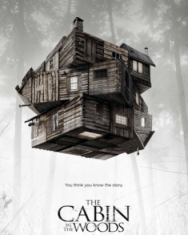 The Cabin in the Woods offers a satirical look at horror tropes while still taking itself completely seriously and providing genuine tension for the characters and the audience. The main plot is deliberately cliche-riddled in the best possible way, and the underlying subplot (which I won’t discuss because of my no spoiler policy) adds a whole new dimension. Despite skirting the edges of parody, it’s definitely a horror movie, and one of the most creative, original, and engaging examples of the genre I’ve ever seen. This is a movie I’ve watched again and again, and enjoyed every single time.
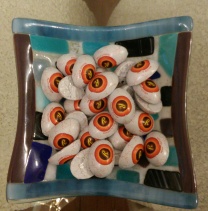 Reese’s Peanut Butter Cups are hands down my favorite candy, and they have so many cute Halloween options! Any candy is likely to make trick or treaters happy, of course, but I love going the extra mile and giving out treats with the holiday theme. Monster Mania miniatures are available at Target, and the wrappers are just adorable. Other options include bats, ghosts (for white chocolate lovers), pumpkins, and eyeballs, which I’m pretty sure are new this year. The latter have been filling my special candy dish (
 I have long been a fan of Kate Morton’s multiple perspective multi-generational mysteries. Her novels are wonderful examples of how a narrative can move back and forth through different time periods as a story unfolds through the eyes of a variety of well-developed characters.
  I’ve made no secret of the fact that I am a huge Malcolm Gladwell fan. In
 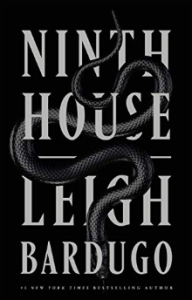 I have read and enjoyed all of Leigh Bardugo’s young adult books, especially because each one was better than the last. So the adult fiction debut of an author I believe is constantly improving was a very exciting prospect. The book more than lived up to my expectations. The premise, that there are secret magical societies operating at an Ivy League university, is fascinating and extremely well-developed. The underlying mythology of the book is built slowly and organically and the protagonist was impossible not to root for as she struggles to find her place in several unfamiliar and difficult situations. From the very first line, “By the time Alex managed to get the blood out of her good wool coat, it was too warm to wear it,” the reader is in for a multilayered mystery and fascinating reveals. Ninth House is a wonderful book, and I cannot wait for the sequel.
 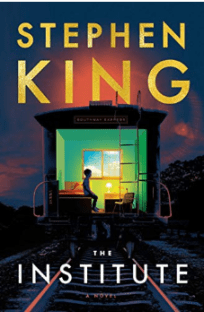 I had a little trouble categorizing this one. Stephen King is, of course, best known for horror, but while there are some elements of horror in this book, I wouldn’t quite put it in that genre. Thriller might fit. Or maybe fantasy, because psychic abilities are central to the plot. Amazon lists it as “Psychic Suspense”, “Horror Suspense”, and “Psychic Thriller”, and I suppose that covers it. Anyway,
 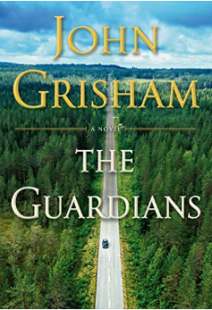 This is a tough one. Grisham based the protagonist of this book on a real person and created a great character. He based the central case on a real case and created a really interesting core plot. I enjoyed reading about a group of people determined to see justice done for the wrongly convicted. There was a lot I really liked about this book! About halfway through, though, I noticed that while I wasn’t bored, the book was easier to put down than I expected. What I finally realized was that it was mostly lacking in serious tension. The narrative unfolded with the majority of the conflict independent of the actions of the protagonist. Evidence was found or it wasn’t. Witnesses changed their story or they didn’t, or they did later. Some people got in the way, until they didn’t. The writing was good, the narrative was interesting (except for a tangent near the end I found thoroughly bizarre, but I could deal with it), but even though the stakes were high, I never felt like there was enough agency or influence from the narrator. So, I liked the book, and was interested, but not exactly gripped by it. It felt more like well-written nonfiction than fiction, and I’m still sort of trying to come to my final opinion. What I can say is that it was worth the time and money, but it wasn’t what I’ve come to expect from fiction.
 Over the past few weeks, I’ve been terrible about keeping up with all the great blogs I follow. I temporarily offloaded a few things at work. I backed out of social commitments. I took several personal days. And I briefly struggled with guilty feelings related to all of those things. However, I reminded myself that I had to prioritize, and that one of those priorities had to be my emotional health. I needed to rest. I needed to spend time with my family. I needed to provide support for people who were hurting more than I was, and then set aside time to focus on my own grief. There’s nothing selfish about taking care of yourself.
 I sometimes find it difficult to open up and admit that I’m struggling, but I’ve been working on that a lot, because it’s so much better when I do. The people who care about us aren’t asking if we’re all right or if we want to talk as an empty social nicety, but because they genuinely want to be there for us. Don’t ever hesitate to ask a friend or loved one for their time, attention, or help. You aren’t “bothering” them-you’re giving them a chance to be there for you.
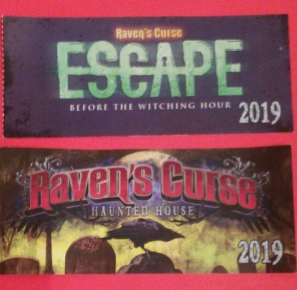
 If you’ve been reading my blog for awhile, you know I like scary stuff. I am fascinated by make up effects, animatronics, and scene setting in general, but especially in horror movies. So a haunted house seems like a perfect fit. So perfect, in fact, that you’re probably wondering “Amanda, wouldn’t this be something you do all the time?” I have been to half a dozen haunted houses in my life, but the last one was almost twenty years ago, so this one will be kind of a new experience. To be honest, I stopped going to Haunted Houses because they did exactly what they were supposed to do: scared the life out of me. There’s a huge difference between seeing all that cool horror stuff on a screen and having it jump out in your face. There came a point where I started making excuses not to go rather than going.
  My mother did candle making a few months ago and told me it was a lot of fun. Since Mom almost never steers me wrong (case in point: she was the one who suggested
  I love cooking. I especially love baking. I am absolutely horrendously terrible at decorating. If you’re newer to the blog, you might think I’m exaggerating. I assure you, if anything,
 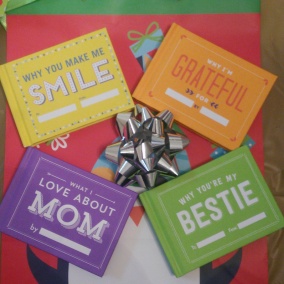 The impetus behind this is pretty simple: putting your time, energy, and effort into a present for someone makes it mean more. Additionally, most of the people in my life are at the point in their lives where they get hard to shop for. I know this, because I’m at that point myself. In my 20s, and even my early 30s, when someone said “what do you want for your birthday or Christmas?” the answers were easy. I need a bookshelf. I need a new set of kitchen knives. I need a DVD rack. The key connecting factor there was “I need”. After awhile, though, you get to the point where you have accumulated the things that you need and even most of the things that you want. I have trouble making my own Christmas list, much less figuring out what to get everyone else. So the idea of something personal that I created is really appealing.
 Remember that whatever is going on at the moment, it will end. The same way we push ourselves to physically endure the last quarter mile of a long run, we can mentally focus on a situational finish line. Looking forward helps us to feel more calm and collected when our current circumstances are less than ideal. This is especially important if you’re dealing with someone who’s pushing negativity at you, because usually taking immediate action only prolongs the interaction. If someone is highly emotional, trying to respond is not going to make the situation go away. Neuroscience has found that the more engaged the emotional part of our brain is, the less we are actually capable of thinking logically. Odds are that the person who is yelling, ranting, or having a meltdown is not going to respond to rationality until their emotions have run their course. It can be incredibly hard to let that happen, because our instinct is to try and defuse a situation, and we want to protect ourselves from our own emotional onslaught. However, waiting it out is almost always better in the long run…which means you need to try and keep your cool in the meantime. (For more on the interaction between emotion and logic,
  Our minds, bodies, and emotions are intertwined, and constantly influence each other. Taking control of those interconnected systems can allow us to better regulate our reactions to difficult situations. The natural physical response to stress and anxiety is to breath fast and shallowly. At the same time, our natural response to breathing fast and shallowly is to feel more stressed. See the problem? Physiologically, rapid breathing is intended to give us a burst of energy and allow us to push ourselves in a dangerous situation. However, when we aren’t reacting to physical danger, it just makes us feel sick, because of the flood of fight or flight chemicals our body is producing, but not actually using. (
 When stress gets overwhelming, sometimes you have to be able to emotionally pull back from the situation. Even if you can’t physically step away, you can create some mental distance to lessen the emotional impact. This involved focusing a small part of your attention on a logical mental task, without ignoring the situation in front of you. For example, you can mentally count odd numbers, or recite the alphabet backwards. This forces the logical part of your brain to engage, and just like the more emotional you feel the less logical you become, the more you think logically the better you can control your emotions. You’ll still be present and participating, but you will feel more in control and less emotionally invested in the situation, leaving you free to pursue a resolution.
 If your boss is yelling at you, start forming action steps. If a customer is irate, let them vent while you consider what you can do to resolve their issue. If your kid is throwing a tantrum, focus your mind on the things you need to discuss when he or she calms down. If you’re stressed because a lot of things are happening at once, do a mental triage, instead of feeling like “I must immediately answer this phone call, read this email, sign this report, and talk to the person in front of me”.


 This is where Chapter Two is most successful. There is some truly scary stuff in this film, especially in an early scene shortly after the protagonists (now adults), reunite in their hometown to face the return of the monster from their childhood. In addition to that standout scene, you can expect to see Pennywise in a variety of different forms, most of them tailored to the characters’ individual fears and circumstances. I did find the climatic sequence a little overlong, but have discovered that even in my personal circle opinions vary wildly on that point. This movie takes a lot of pages from the classic monster movie aesthetic, and in that respect, it mostly works.
 Let’s just get this out of the way: if you liked Chapter One, it’s a good idea to lower your expectations, because IT Chapter Two is a far weaker film. For one thing, the adult versions of the characters are nowhere nearly as well developed as their childhood counterparts. The filmmakers seemed to feel that the audience knew enough about the kids to instantly understand and connect with the same characters as grown ups, and so they decided cut character development in favor of more monsters. The movie also features a lot of flashbacks to the characters as children, which, unfortunately, didn’t actually succeed in making the adults feel three-dimensional. To be honest, I not only failed to connect with the protagonists, but found them genuinely frustrating. Instead of frightened, but determined, people who trusted the strength of their bond and believed that they had a responsibility to confront a great evil, there was a lot of conflict centering on the desire to run away. The movie even goes so far as to add a selfish motive to pull them in, introducing psychic visions (don’t get me started) that prove that if they don’t confront Pennywise, they’re all going to die. Even the instances of nobility were undercut by other factors (which I won’t discuss because of my “no spoiler” policy, but trust me on this).
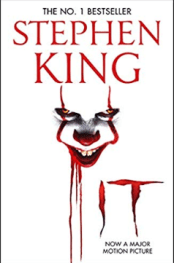 There’s no way to dive deep into this without massive spoilers for both the book and the movie, but I wanted to at least give book fans a heads up. As an adaption, once again, Chapter One worked a lot better than Chapter Two.
 Amanda Cade