
I’ve been at home for about six weeks now, and while the state of Missouri is easing restrictions this week, the St. Louis stay at home order is still in effect until at least mid May. My employer intends for us to continue working from home for the foreseeable future, and I’m grateful we’re in a position to make that work. As some areas are beginning to slowly reopen, there’s a lot of talk about “getting back to normal” or “the new normal”, but the truth is that we’re a long way from feeling any level of stability.
We value a feeling of normalcy because it helps give us a sense of control and purpose and keeps us from being in a constant state of fight, flight, or freeze. Being in crisis mode exhausts our minds and bodies and negatively affects our immune system (see this post for more on that). However, these days we have a lot of extra hurdles.
Instead of focusing on things getting back to normal, now is a time to recognize that there’s still a long road ahead of us, and that our focus should be on creating a feeling of normalcy and stability, so we’re able to cope with the challenges. Here are some things to try:
1. Evaluate your routine.
 Routines and schedules provide us with a sense of stability, security, structure, and control. From the beginning, experts have urged us to establish schedules, follow old patterns, limit our pajama time, etc. I’ve talked to a lot of people recently who say that they started well, but their routines have been breaking down as more time passes. Now is a good time to reflect on your current practices, and see if you need to adjust what you’re doing on a daily basis, or recommit to things you’ve let slide (and I want to urge you again to maintain a consistent sleep schedule). If your situation is changing, such as returning to work or beginning to resume other activities, this is definitely the time to think about how you’re going to adjust your daily life.
2. Take time to process your emotions.
 Emotions help us recognize our wants and needs, and it’s important to do emotional check ins, especially since we’ve all been under consistent pressure. Covid has brought a unique wave of stress, anxiety, depression, and grief. What are your emotions and body telling you? As I pointed out last week, it’s important to validate your feelings. Take time out to process your emotions, and to practice coping skills.
3. Monitor your information intake.
 You can choose how you receive and consume information about the outbreak. Start by really assessing how much information is good for you, because that varies widely from person to person. My father is one of those people who gets calmer the more he knows, so watching the news is actually a stress reliever for him. My sister Audrey, on the other hand, has found it difficult to emotionally process a lot of what’s happening, so she avoids the news and relies on others to summarize the important information for her. Find the level that’s comfortable for you, and stay there. You might consider stepping away from social media and TV for a period of time or limiting your daily intake. Also, I encourage you to seek out a balanced perspective, especially if you live in the United States, where the pandemic has become sadly politicized.
4. Utilize self care practices and coping skills.
 Self care is always important, but right now it’s imperative. Make a list of things that give you peace, stimulate creativity, provide escape, feed your spirit and offer healing. Pursue your hobbies. Employ coping skills that help keep your mindset positive and calm, such as thanking yourself, forgiving yourself, or making a gratitude list. This can be a great opportunity to develop stronger coping skills and new healthy habits.
How are you handling things at this point?
 What was intended to be a supportive social interaction devolved with shocking speed into an angry venting of stress and frustration, directed not at the situation, but at each other. I wish I could say that I stayed out of it, but I’m going to be honest and tell you that when I felt attacked, I eventually struck back. To say that none of us were being our best selves would be a colossal understatement.
  One especially useful part of the conversation was when one friend quoted a line from a Matchbox 20 song: “I’m sorry about the attitude I need to give when I’m with you, but no one else will take this s*** from me”. From there, we agreed that it’s important to understand and forgive each other, but that we should also be careful how often we take advantage of that pledge.
 Inertia is a powerful force, especially when it’s couch induced inertia. On top of that, the guidelines for social distancing can easily be read as “stay indoors at all times to prevent catching or spreading COVID-19,” especially in the early days when it wasn’t clear exactly what was, and was not, a threat. With everything going on in your home, it’s easy to forget how long it’s been since you were last outside, and the overwhelming fear of exposure adds an edge to the impulse to stay hidden from the world completely.
  And don’t forget the other benefits of sunlight.
  Set aside twenty minutes a day to be outside. During the day. Plan ahead, like you would plan a trip to the grocery store or any other essential trip. Avoid places that will attract crowds. If you have somewhere that you can be outside and have complete privacy, like a lawn or a balcony, that would be your safest bet. If you don’t, pick places and times that won’t be high traffic. If you’re working from home, you might be best served going outside on your lunch break, for example. Again, only 5-15 minutes in the sun reaps rewards, so you don’t need to make this into a huge excursion. If, on the other hand, your living conditions don’t allow for you to go safely go outside with minimal crowds, take advantage of windows. When the sun’s shining, open a window, let in some fresh, and bask in the sunlight.
 Even if you’re still expected to be “at work” at the same time, there are normal morning activities you no longer have to do. If nothing else, you get to skip the commute. My job is being super flexible in terms of when we get things done, as long as they’re done within a specified timeframe. I have several daily meetings, but the first one doesn’t start until 11am. Some of my colleagues have gone from getting up at 6:30 to getting up at 10:30. Sleeping in is a luxury we don’t often get, so it’s hard to resist hitting snooze, or changing the alarm. After all, the more sleep you get, the better…right?
 Everyone has an optimal amount of sleep to get. For adults,
  Alarms are your friend and ally here. Not
  You also have to have good habits in the morning. An alarm here is going to be important, even as your body starts adjusting to the point where it wakes up on its own. Once your alarm does start beeping, actually get out of bed. If you don’t get up, you’re likely to find yourself drifting back off to sleep, defeating the entire purpose.
 That having been said…I’m doing just fine. As an “extroverted introvert” (
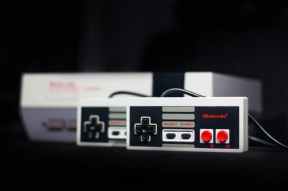 For some reason, though (probably because I have a lot of extra time these days), I found myself thinking about how much I loved those old NES games, so completely on impulse, I ordered the NES Classic from Amazon. This adorable miniature game console comes with thirty old school games, and I thought it might be something fun to play around with during quarantine, and a cool addition to the party I plan to have once all this is over.
 My parents live close to one of the largest food pantries in the metro area. When they got the word that demand was increasing while supplies decreased, we all made online donations, and spread the news to others in our social circles. Wherever you live, there’s a very good chance that there’s a local organization that could use help meeting the needs of your community.

 There are often things in our personal and professional lives that we can anticipate and do in advance, so they’re off our plates when things get busy again. I’ve made a list of things that are due in a few weeks or months, and have started working on those a little bit every day. I’ve also been researching for future blog posts and ordering gifts for upcoming birthdays and other events. Since I’ve been spending a lot of time in survival mode these past few months (see my survival mode
  Over the past year, my guest room has turned into a junk room. It started with casually putting one or two things in there to “find a place for later”, and then snowballed. Since I haven’t had any overnight guests lately, I let it get way out of hand. I’ve been planning to deal with it when I had time…and now I do. Once I started working on organizing the guest room, I began to think of other areas in the house that could use cleaning out, and have made a list. I’ve also made a list of personal goals and pursuits that have fallen by the wayside. For example, I’ve been trying to do more writing, but keep getting distracted by other things. I have a thousand piece jigsaw puzzle in the basement that has been 85% completed for months. I’m starting to feel like my piano is glaring at me every time I walk by it without even brushing the keys. So I recommend stopping to think about the things you’d like to spend time on, both productive and recreational, and devoting some time to them.
 I’m not suggesting that we all turn into couch potatoes, but doing some controlled binge watching isn’t the worst idea right now. In the past few months I’ve missed a lot of movies I wanted to see, and many of them are now available to stream, so I’ve updated my watch list and have allotted myself a few hours of TV time every day. I’m spending even more time reading. Regular visitors to the blog know that I’m a voracious reader, and an advocate for increased reading for everyone (see
 I think I’ve mentioned, or at least hinted, that I’m prone to sinus infections and bronchitis. So when I started developing symptoms a few weeks ago, I did what I always do and went to the doctor. I took a few sick days, and have been taking medication and getting lots of extra rest, as recovering is a slow process (I was pretty sick at first). Early on, there were a few jokes at work about COVID-19, aka the Coronavirus, but I assured everyone that I didn’t have it, and wasn’t contagious, and we moved on. At that point, no one was actually concerned (except for concern for my health, because my coworkers are nice people).
 Meanwhile, I still have a mild cough and am feeling a little run down. By the middle of last week, I started noticing people looking at me funny. It’s been happening a little at work, and a
 Just like the stress response is physiological, our bodies have a counter mode: the relaxation response. This is what happens when our brains send the “all clear” message to our bodies, allowing all those fight or flight processes to turn off and stop messing with our balance. Obviously, the most effective way to trigger the relaxation response is to stop feeling stress, but that’s easier said than done. Instead, there’s a way to work it backwards, and that’s with breathing. Slow, deep breaths signal the body and the brain that it’s time to drop out of crisis mode. I wrote
  Diet is crucial as well. When you’re stressed, your body starts to demand carbohydrates, since it’s convinced it needs them to help you deal with the physical danger in front of you (remember, your body always assumes you’re in physical danger). Again, we can blame this one on our ancestors, as they were often in physical danger, plus there were times of famine. In both those cases, favoring sugar and fat helped them survive. In the modern world, however, sugar and fat definitely aren’t in short supply, so our physiological response is in direct opposition to best practices. Our bodies want us to mainline sugar, like, just as a random example, eating a dozen donuts in the course of one morning. Ok, so that example wasn’t so random; in fact, it’s what inspired me to really dig into the relationship between food and stress. I wasn’t surprised to find that eating a balanced diet is important, but I was pretty interested in the science behind it.
  This is where you assess and try to make changes. Reflect on what caused your life to get overwhelming, and consider how to prevent it in the future. Were there warning signs you can look for next time? Are there preventative measures you didn’t know enough to see before? Can you delegate or ask for help moving forward? Are there things that you’d do differently now that you’ve been through it?
 Survival Mode is what happens when you are undergoing a prolonged stress response.
  Survival mode typically leads to feeling overwhelmed and an inability to enjoy, or sometimes even accomplish, everyday activities. What’s worse is that the effects of survival mode often directly work against our ability to break out of it.
  For starters, be aware that it’s going to creep up on you. One big, terrible thing happening causes a trauma response, which is a whole different animal. Survival mode is a risk when little things are triggering that fight or flight reflex over and over again. You need to take time to assess where you are and how you’re feeling. If your days tend to be filled with repeated pressure and emotional spikes, that’s a warning sign. If you’re familiar with the symptoms I talked about above, that’s another. And if the “just let me get through this, and then this, and then this” attitude I talked about at the start of the post sounds familiar, you should definitely reflect on your situation.
 Amanda Cade